Tuesday, June 26, 2012

Environmental Engineering as a Career Choice

Taos Ski Valley, New Mexico Summer 2012

I was on vacation recently in New Mexico while I was there I did a lot of hiking.  As it often happens when I am out in nature I reflect on my choice of professions.  I find that as I get older I do a lot of that!  I feel abundantly blessed to still like what I do after 27 years. One of the reasons I chose environmental engineering is because I love the outdoors and I love to be surrounded by nature.  So it's no surprise to me that I reflect on this as I am out in nature!  I do feel fortunate to be able to work in a field that has such a direct impact on the environmental that we live in.  As I hiked through the Alpine Meadows at Taos Ski Village I felt thankful for the past 27 years of my life that have been so fulfilling.  Throughout its ups and downs over the years, I would still recommend Civil or Environmental Engineering to anyone considering either of these two noble professions as a career.  It’s still fun for me, each day brings new projects and the possibility of doing something that helps to make the world a better place.  That may seem corny to some, but to me it really is a blessing.

It is one of the few fields that one can be both creative and scientific at that same time.  This is probably what appeals to me the most about it.  That and the fact that we can see the projects that we are fortunate to work on come to fruition and be constructed within our lifetimes!

So as summer swelters on here in Miami, Florida, I’ll reflect back on my hike in the Alpine meadows up to Williams Lake at elevation 11,000 feet.  There was still snow on the ground, the air was cool and crisp and even though I found myself gasping for air on the way up, I felt exhilarated and alive.  Glad to be doing the hike knowing that in some small way the work that I do helps to make sure we protect the air that we breathe, the water we drink and the environment that we live in!
Williams Lake Taos Ski Valley, New Mexico Summer 2012

.

Monday, June 4, 2012

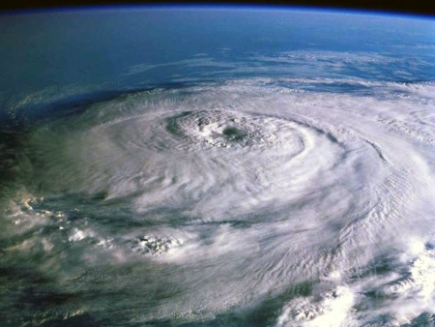
Hurricane Season Is Here Again

Well folks, it's that time of the year again - hurricane season. Doesn't it seem to get here earlier each year? At least it does to me. Anyway, as residents of South Florida, we all know the drill which is to have at least six items in stock for at least 3 days: water, food, first aid supplies, clothing and bedding, tools and emergency supplies, and special items.


2012 marks 20 years since Hurricane Andrew devastated South Florida, and thank God for all the strides we've made in updating building codes and educating the general public. But on the flip side, it's been 20 years which means new residents who weren't here during Andrew. Remember, Andrew was the FIRST hurricane of the 1992 season in August! And it only takes one storm to cause devastation.

So just a friendly reminder to not be complacent this year. We've had six years of essentially no major storms affect our area. Be mindful of getting your trees trimmed, remove objects from your patio and backyard that are potentially airborne missiles, and this includes containers that can hold water and also create a mosquito nuisance. Be safe!

http://www.westhorp.com/v-10347-Stormwater-Management 

Thursday, May 31, 2012

Phase I and Phase II Environmental Site Assessments

We've all been hearing on the news that the South Florida real estate market is beginning to pick up, and you know what that means: Bank loans. And what is one of the requirements from these institutions for commercial transactions? A Phase I Environmental Site Assessment (ESA). These are conducted on a property to protect the owner from some unknown liability that may be associated with soil and/or groundwater contamination. A Phase I Site Assessment consists of regulatory file reviews, interviews with current and previous property owners, and a site visit. We've been getting phone calls and inquiries from prospective buyers whose banks are requiring them to submit a Phase I Site Assessment report.  It's also a good idea to do an Environmental Assessment Report whether or not it is required for financing.

Sometimes the outcome of a Phase I Site Assessment may lead to a Phase II ESA which involves soil and groundwater sampling. We know quite a bit about Phase I and II Site Assessments since we've been doing them for about 15 years now. We follow the ASTM E1527-05 standard for conducting a Phase I ESA, and the recently updated ASTM E1903-11 standard for a Phase II ESA.
The South Florida office market has entered the recovery phase, which puts it ahead of the markets in Tampa, Orlando and Atlanta in the Southeast according to a recent survey from accounting giant PricewaterhouseCoopers.  For more information at http://westhorp.com/v-10293-Environmental-Site-Assessments

Thursday, May 24, 2012

We Make It Dry, We Make It Drivable


Every time there is a big rain event, I realize more and more how important it is to have a drainage system that works properly, especially after this week’s record rainfall in West Dade.  Coming from a third world country, from a city where even today all the rain either evaporates or goes to the ocean, growing up seeing the streets flooded or not being able to go anywhere because it was raining, this was the norm.  This is just the way it is when you live in a town with a population of 400,000 and where everything is essentially 10 minutes away.  But after first moving to a large city with over 6,000,000 people and now living in Miami-Dade County, I realize that we don’t have that luxury.  Being able to have our roads dry and drivable is a must.

NW 116th Way After a Rain Event
Yesterday, I drove through NW 116th Way in Medley. This was a stormwater drainage project that we designed and construction was completed just over a month ago.  This was the day after the record rainfall (more than 5 inches in one evening!). It was still raining when I drove through the area, and wouldn’t you know? The road was “dry and drivable”!  What a great feeling, especially knowing that just 6 months ago, even a small rain event created water ponding. This impacted the traffic on this extremely busy road which connects the Florida Turnpike with I-75.

Our biggest satisfaction as engineers is knowing that what we design makes our everyday life better.  In many ways, we are the creators of those things that you don’t notice when you have it, yet when it’s missing that’s when you realize how valuable they are.  That is the case of a good, working drainage system.  Think about how many times you pay attention to catch basins or think about where stormwater is going.  Not much if you are like most people!  However, just turn on the TV after a big rain event and sure enough, the headlines are all about which areas are flooded, where cars got stuck, and how many businesses and homes were affected. 

We feel a sense of satisfaction when we see work completed that we helped to make “dry and drivable”!
For more information visit us at:

http://www.westhorp.com/v-10347-Stormwater-Management

Wednesday, May 23, 2012

Engineering: Get Your Tuition's Worth!

We engineers, in case you aren't fortunate enough to know one of us, are a very practical breed. We're the type of folks who play it safe, hedge our bets, and generally pick the most efficient or most effective option. It's what makes us good at what we do (helping clients or employers find effective solutions) and maybe why we chose what we do in the first place.

Analysts at PayScale combed through a wealth of information to determine the 15 Most Valuable College Majors, Civil Engineering and Environmental Engineering came in back-to-back at No. 5 and No. 6. Not only that, engineering dominated the rankings, taking 1/3 of the 15 spots.

The rankings were based on a number of factors, including median starting salary, job opportunities, and salary growth. Specialized fields like engineering are in high demand now and will be in the future, so if you're considering a career in engineering for yourself or a loved one, don't fret, it'll be worth every penny!


By Lricewiki via Wikimedia Commons
To read more about the Top 15, check out this Forbes.com article

Friday, May 18, 2012

Fracking and Methane Got Me to Thinking

So by now everyone must have heard about fracking, or hydraulic fracturing, which is booming in some of the northern states where there are new oil/petroleum/natural gas sources being explored and extracted. I heard a story on NPR this week about the methane trail that fracking leaves. Which naturally lead me to thinking about other methane sources such as cattle, vehicles, and of course landfills.

Since I can't do much about the cattle or the vehicles, I'll focus on landfills. They have become much better at capturing their methane and using it wisely. You know those nice green hills you see driving down the Turnpike, with little black pipes sticking out of them? Well those hills are landfills, and the black pipes are actually methane extraction wells which are connected to vacuum system that is actively sucking the methane out of the buried solid waste and routing it to either a flare system or a methane capture system.

Methane Extraction Wells at the Top of a Landfill
Methane Extraction Wells on the Landfill Side Slope


These large landfills have active gas management systems, however not all gas management systems are created equal. We have assisted several clients in designing and managing passive gas management systems on their properties which were built on former solid waste dump sites. In fact, I'm thinking of adopting the slogan "Landfills R Us"...

For more information on our solid waste services, visit: http://westhorp.com/v-10346-Solid-Waste-Management 

Wednesday, May 16, 2012

The Rainy Season Has Arrived

In case you were wondering, it's official-the start of the rainy season is here.  For those of you new to South Florida (it's a Capital S to me whether its right or wrong), we have two kinds of weather.  Wet and dry.  It's that simple.  The humidity is about to soar, temperatures are already high and pretty soon if you add the heat index to the percent humidity in the air you get close to 200!

With the start of the rainy season here we have already begun to receive calls relating to drainage problems.  This is when we begin to find out what systems are working and which are not.  Mostly we notice when something is not working.  When was the last time you jumped out of bed and said, "Oh, good, my alarm clock is still working!".  No, human nature being what it is we usually find out that the damn thing is broken by default.  "Oh crap,  look at the time, that damn (or other expletive) thing isn't working!".  So it goes with the much overlooked drainage systems that toil to keep us moving freely about during all kinds of inclement weather.

So we get calls when buildings are flooding because the existing site drainage doesn't work anymore.  Or that parking lot out back is flooded and the boss is pissed!  Or a particular road where businesses can't get through because whenever it rains, it becomes the Mississippi River.  It seems that the one little pipe that was put in back who knows when that no one has thought twice about in 20 years has finally given up.  This happens all over time if neglected.  We don't forget to change the oil in our cars if we want it to work in the morning.  Yet the equivalent of this is never checking your storm drainage system to see whether or not it needs cleaning.  It functions a lot like your septic tank.  For my neighbors in Miami Shores you all know what I mean.  If you don't clean it out every so often, it will fill up with (no, not that) sediments.  In the case of storm drains it's mostly sand and particulates that get into the pipes and clog the drains.  Once the drain field (much like my septic tank analogy) is completely clogged it must be replaced.  You can clean it out, but it's probably a waste of money.  Like your septic tank, you might get a few more flushes out of it.....but then, right when your entire family is supposed to be at your house for Thanksgiving dinner you'll get a nasty wake-up call!

For more information about drainage solutions, go to our website at http://www.westhorp.com/Stormwater-Management.  Or call us at 305.759.4757.

Cheers!